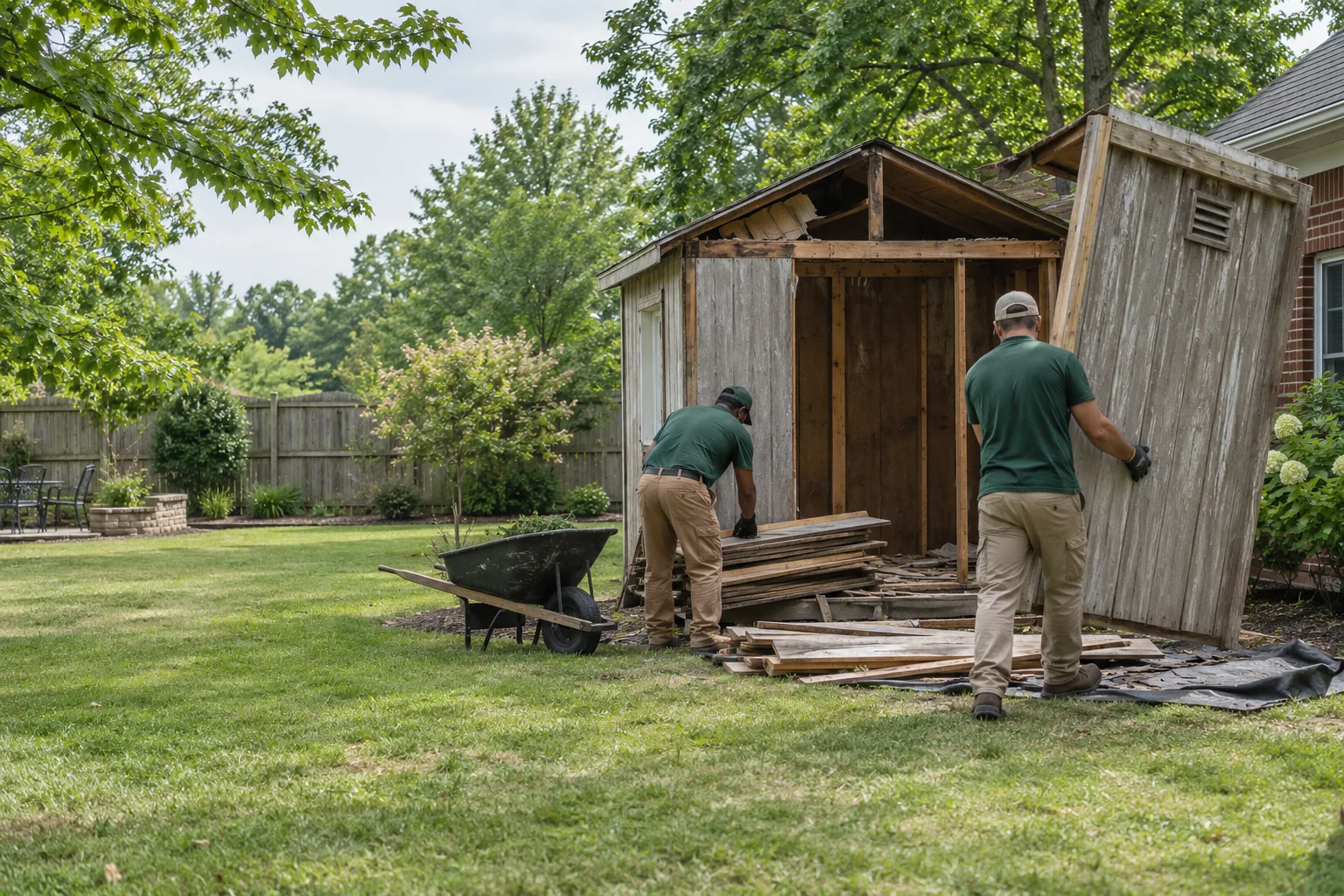
The removal path should be wider than a person because shed panels, boards, and roofing do not turn like a wheelbarrow. Start by photographing the current route before moving anything.
Measure the narrowest point
Check gates, air-conditioning equipment, fence corners, branches, and turns beside the house. Record the narrowest clear width.
Move loose obstacles
Relocate hoses, planters, furniture, toys, and decorations. Protect irrigation heads and note soft ground that could be damaged by repeated trips.
Separate brush from demolition debris
Keep branches, vines, leaves, and grass clippings apart from roofing, treated wood, and household trash. Receiving rules can differ by material.
Stop at tree work
Large limbs, storm-damaged trees, hanging branches, and stump removal require different equipment and assessment. A general yard-waste pickup is not a substitute for a qualified arborist.
Need help with backyard shed removal?
Review the working scope, then call with photos and access details.
See Backyard Shed Removal